
Not every smart home feature makes buyers stop and think, “We have to have this.”
Some do. Others barely register. Some sound impressive in a listing but do very little to influence a buyer’s decision.
This matters for real estate agents because smart home features are often overestimated. Sellers may assume every connected device adds value, while buyers tend to be more practical. Most buyers focus on features that make a home feel safer, easier to live in, or more cost-efficient.
If you are working with buyers or helping sellers position a home, it is important to understand which smart home features actually matter and which ones buyers see as extras.
What Smart Home Features Buyers Actually Want in 2026
Most buyers are not looking for smart technology just for the sake of it. They are looking for solutions that improve daily life.
The smart home features that resonate most are tied to security, energy efficiency, and convenience. Industry data continues to show strong demand for features that improve safety, reduce costs, and simplify everyday living.
1. Smart Security Features That Add Real Value
Security is one of the easiest ways to connect with buyers.
Features like video doorbells, smart locks, motion sensors, and security cameras are easy to understand and immediately useful. Buyers can picture using them right away, and they directly support peace of mind.
For many buyers, smart security feels like a practical upgrade rather than a luxury, which is why these features consistently rank high in buyer interest.
2. Smart Thermostats and Energy-Efficient Home Technology
Buyers are increasingly focused on monthly costs and long-term affordability.
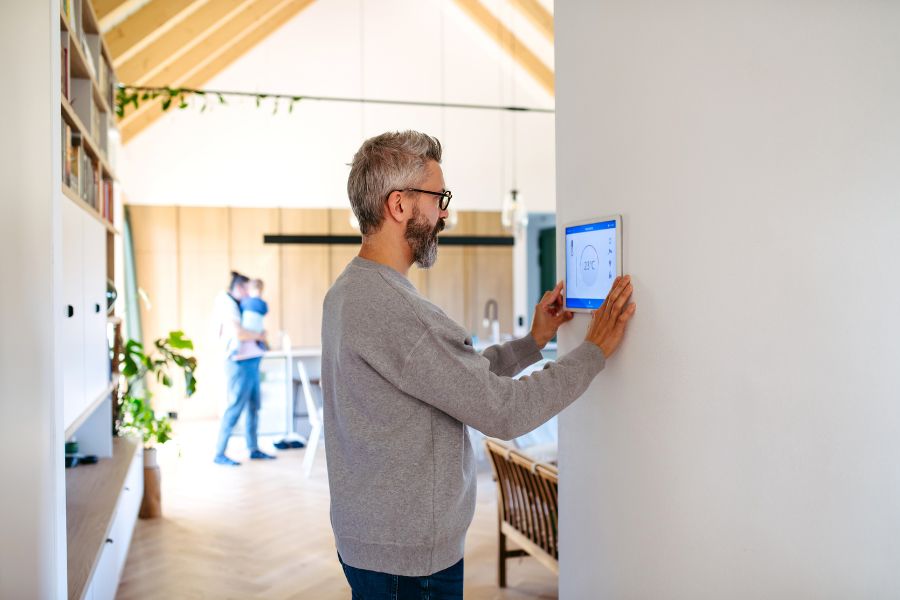
Smart thermostats are especially appealing because they are familiar, easy to explain, and directly tied to comfort and energy savings. Broader energy management systems are also gaining attention as buyers look for ways to reduce utility costs.
Features that support efficiency and financial savings continue to influence buying decisions more than ever.
3. Subtle Smart Home Automation That Improves Daily Living
Some of the most valuable smart home features are not flashy.
Automation like smart shades that adjust to sunlight or humidity sensors that activate bathroom fans can improve comfort and protect the home without requiring constant attention.
These features may not stand out in a listing, but they contribute to a better living experience. Buyers often respond more positively to technology that feels seamless rather than complicated.
Smart Home Features Buyers Do Not Value as Much
This does not mean buyers dislike technology. It means some features have less impact than sellers expect.
Buyers tend to be less interested in features that are:
- overly complicated
- highly personalized
- difficult to explain
- expensive to maintain
- tied to a single app or platform
If a feature feels like it will create extra work or confusion, it can quickly lose its appeal.
1. Gimmicky or Novelty Smart Home Tech
If a feature gets a reaction like “that’s interesting,” it is usually not driving value.
Voice-controlled gadgets or dramatic lighting setups may catch attention, but they rarely influence a buyer’s decision unless they clearly improve how the home functions.
2. Overly Automated Smart Home Systems
Some buyers appreciate automation, but others see risk.
Highly automated homes can raise concerns about maintenance, reliability, and usability. If a system is complex or difficult to explain, it may create hesitation instead of excitement.
Clarity matters just as much as capability.
3. Smart Features That Do Not Fit the Property
Smart home technology should match the home itself.
In newer or higher-end homes, integrated systems often feel appropriate. In more modest homes, extensive or niche smart tech may not feel necessary or valuable.
Most buyers still prioritize fundamentals like layout, condition, storage, and overall livability.
How Real Estate Agents Should Market Smart Home Features
The most effective strategy is to translate features into benefits.
Instead of listing devices, explain how they improve the buyer’s experience.
Instead of saying:
- smart thermostat
- video doorbell
- automated shades
Say:
- helps manage comfort and reduce energy costs
- adds visibility and security
- adjusts throughout the day for light and privacy
This approach aligns with how buyers think and makes your listing more persuasive.
It is also important to set realistic expectations. Smart home features can enhance a property, but they rarely drive value on their own.
Position Smart Homes Effectively with CcMe
The smart home features buyers care about most are practical ones.
Security. Energy savings. Comfort. Convenience. Simplicity.
Features that feel overly complex or unnecessary tend to have less impact.
For real estate agents, the key is clear communication. Focus on how a home helps buyers live better, safer, and more efficiently.